ServicesSoffit and Fascia
Soffit and Fascia in Centerburg
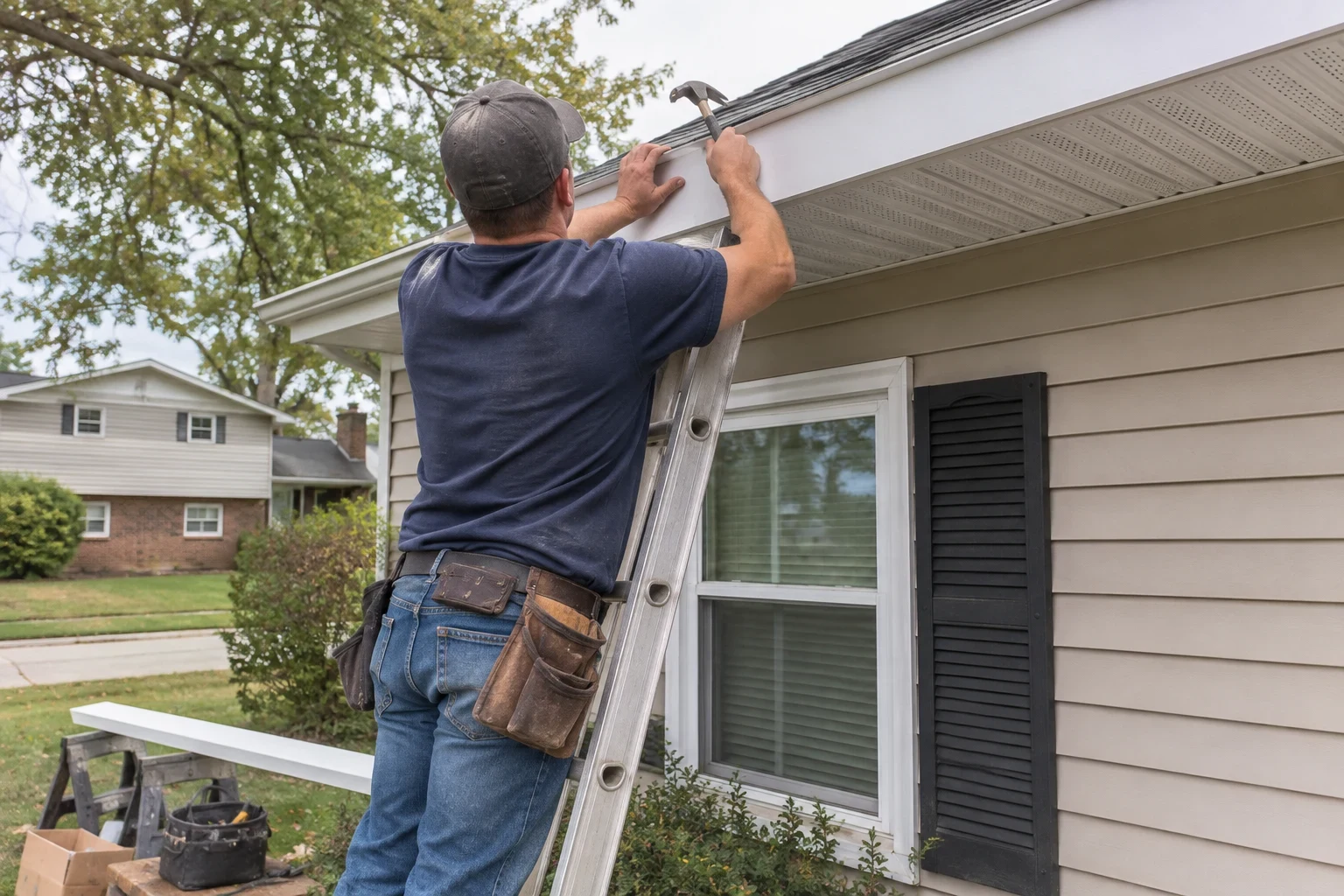
The fascia carries your gutters. The soffit lets your attic breathe. When either one rots or pulls loose, water and animals find a way in. We fix the boards that are bad, keep the ones that are good and leave your roof edge tight.
The trim that guards your roof's edge
Fascia is the board fastened across the rafter ends. It holds your gutters, and the lowest edge of the roof sits just over it. Soffit covers the underside of the overhang, and on most houses it carries vents that draw outside air into the attic.
Most people don't think about either until there's trouble, and the trouble is nearly always water. An overflowing gutter, a missing drip edge or winter ice backing up keeps the wood wet. A few rounds of freezing and thawing later, it turns soft.
We keep it simple. We track down the wet areas, swap out only the rotted boards, correct whatever let the water reach them, and cover the repair so it holds. Fixing a small spot today saves pulling off a full run of trim down the road.
What we take care of
- New boards where fascia has rotted
- Soft or cracked fascia gets cut back until we hit firm wood, and fresh boards go in. Any sections still in good shape are left alone.
- Aluminum cover for fascia
- With sound wood underneath, we can wrap it in formed aluminum coil. That cover sheds rain and snowmelt off the board, and painting it becomes a thing of the past.
- Soffit panels and attic vents
- We fix or swap soffit, using vented panels wherever the attic needs air. Before packing up, we make sure insulation isn't stuffed against those vents and choking them off.
- Drip edge and gutter fit
- Plenty of fascia rot begins with a roof missing its drip edge or a gutter hung too low. We fix the way water comes off the roof so the new trim doesn't fail the way the old trim did.
- Closing gaps animals use
- A loose soffit corner draws squirrels, birds and wasps. We shut those openings with solid material instead of relying on caulk alone.
How to tell your soffit or fascia needs attention
Blistering or flaking paint
When fascia paint lifts, the board underneath is usually soaking up water. Push on it with your thumb. If it gives way, rot has set in.
Gutters leaning off the house
Hangers and spikes only hold in firm wood. A gutter that droops or tips outward often means the fascia behind it is giving out.
Marks or dripping below the overhang
Dark lines on the soffit or water dripping off it show that water is slipping behind the gutter or under the edge of the roof.
Sounds or nesting at the eaves
Scratching overhead in the attic or birds flying in and out of the overhang means there's a hole. Animals widen small openings fast.
Ice piling up at the roof edge
Thick icicles and ridges of ice in winter can mean the attic isn't getting enough air. Clogged or missing soffit vents are often to blame.
Drooping or uneven soffit panels
Panels that sag or slip out of their track let air, water and pests inside, and they tend to get worse every season.
What moves the price
We don't quote soffit and fascia work over the phone without seeing it, because the price depends on how far the rot goes. A short run of fascia behind one downspout is a small job. A whole side of the house with soft rafter tails is a bigger one. After the inspection, your written estimate shows each piece of the job.
How much wood is rotted
Most of the cost is in the linear feet of fascia and soffit that need to come out. Rot that has reached the rafter tails adds carpentry time.
Height and access
A single-story ranch is quicker to work on than a two-story gable end, or an overhang above a deck or steep slope.
Material choice
Painted wood, aluminum wrap over wood, and vinyl or aluminum soffit panels each cost differently. They also need different upkeep over the years.
Gutters and drip edge
If the gutters have to come off and go back on, or the roof needs drip edge added, that becomes part of the price.
What happens on a soffit and fascia day
- 1
First, a close look at the edge
Before any numbers, we go around the whole roof edge, press on the wood and look behind the gutters for hidden soft spots. You get photos of every problem area and a written estimate that lists each repair as its own line.
- 2
Ladders up, yard covered
We use standoffs on the ladders so the gutters don't get bent. Tarps go down over flower beds and walkways below where we're working.
- 3
Out with the rot, in with new trim
Where the gutters are in the way, we take them down. Rotted boards come off, any soft rafter tails get repaired, and new fascia and soffit go in. The gutters go back up with enough slope to drain.
- 4
Wrap, seal and sweep
The aluminum wrap is bent and fitted right there at your home, and the joints get sealed. We close up any gaps animals could use, then run a magnet and a broom over the ground to pick up nails and scraps.
Soffit and fascia questions
Can you just replace the bad sections instead of all of it?
Yes, and most of the time that's what we do. We cut out rotted wood back to sound wood and splice in new boards. If most of a run is soft, we'll tell you it makes more sense to replace the whole thing.
Should I wrap my fascia in aluminum or keep painting it?
Wrap protects the wood from rain and snowmelt, and you stop painting. It only works over solid wood, though. Wrapping over rot hides the problem and lets it spread, so we replace bad boards first.
Do I need new soffit vents if my attic seems fine?
Not always. We look at your attic airflow during the visit. Heavy ice at the eaves, frost on the underside of the roof deck, or a very hot attic in summer usually mean the vents aren't doing their job.
Will you have to take my gutters down?
Often, yes. The gutters hang on the fascia, so we take them down to replace the boards behind them. We put them back up with the right pitch. If they are worn out, we can talk about new ones through our gutters service.
Is this something to fix before a roof replacement?
If you are planning a roof replacement soon, it makes sense to do the fascia and drip edge at the same time. If the roof still has years left, we can fix the trim now on its own. A roof inspection will tell you which makes more sense.
Stop the rot at your roof edge early
Let us know what you've noticed under the overhang. We'll pick a time to visit your home in Centerburg or a town nearby and check it over.